

ข่าวสารและโปรโมชั่น
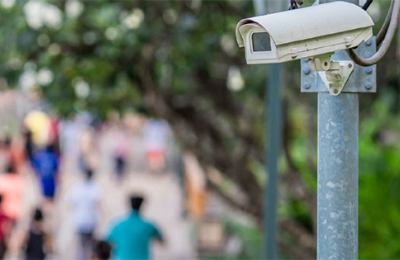
BRIEFCAM AT WORK IN SAFE CITIES
DELIVER SAFE, SECURE, AND SUSTAINABLE CITIES From local police forces to military units and federal agencies, law enforcement worldwide relies on video surveillance to collect intelligence and evidence crucial for preserving order, protecting citizens and increasing security. Most cities and towns have video surveillance systems, but not all of them leverage those systems effectively. By collecting and structuring video data, BriefCam’s video content analytics (VCA) technology enables law enforcement agencies to efficiently visualize and analyze video content. ACCELERATE INVESTIGATIONS Processes video to make it searchable, actionable and quantifiable. By identifying objects in video footage – such as clothing, bags, vehicles, animals, and other items– and indexing them, hours of video can be reviewed in minutes, easily searched and quickly comprehended. Enables the collection of evidence and intelligence based on a powerful set of distinct search combinations. Offering 27 classes and attributes, in addition to face recognition, speed, path, direction, dwell time, appearance similarity, color, and size, video can be filtered with speed and precision. ATTAIN SITUATIONAL AWARENESS Triggers real-time notifications when individuals of interest or suspicious activity is detected, based on face recognition and behaviors, such as loitering, jaywalking, entering restricted areas and more. This empowers officers to be more responsive and proactive as situations develop. Increases situational awareness by triggering real-time count-based alerts based on customizable dynamic rules, such as when a specified number of objects or a concurrent number of objects appear in a predefined area within a certain time period. DERIVE OPERATIONAL INTELLIGENCE Renders customizable reports and dashboards to indicate human and vehicular traffic patterns. Enabling urban planners and law enforcement agencies to better understand and optimize the flow of people, cars, public transport vehicles, and even bicycles. Detects trends, such as traffic throughput and crowding trends, so law enforcement can assess areas of interest or monitor for potential threats. TRANSFORMING CITIES AROUND THE WORLD BY OPTIMIZING BOTH SAFETY AND OPERATIONAL EFFICIENCIES SPRINGFIELD, MA POLICE DEPARTMENT The Springfield, Massachusetts Police Department launched its Real-Time Analysis Center (R-TAC) three years ago as part of its commitment to using the newest tools of the digital age to give officers the most current information for real time crime analysis and situational awareness. The BriefCam VCA software is an integral component of the R-TAC because it allows analysts to quickly review footage from traffic cameras at any of several dozen locations around the city. Analysts can condense hours of footage into a couple of minutes and enable police to pinpoint objects of interest, filtering out irrelevant objects. When a 911 call comes in, dispatchers coordinate the address on the map with the nearest traffic cameras in the area to see if there is footage of potential suspects coming or going. If there’s a description of a car fleeing the scene, they can quickly review footage from cameras nearby, filtering out traffic that does not match the description. Working with information in real-time increases officer and civilian safety as officers respond to incidents. During a recent fatal shooting incident, R-TAC analysts were able to quickly view several perspectives of the crime scene via different cameras, and deliver timely, accurate and actionable information to the responding officers. “There’s a lot more it [BriefCam] can do. It’s a phenomenal tool that allows us to operate pretty quickly up here.” William Schwarz, Director, Springfield Police Crime Analysis Unit CHICAGO, IL POLICE DEPARTMENT To track and deter crime, the Chicago Police Department has a new high-tech analytics center that leverages tens of thousands of police and private-sector video surveillance cameras, as well as gunshot detection platforms, predictive mapping and data analytics. The CPD combines BriefCam video analytics with other capabilities enabling state-of-the-art investigative techniques. Thanks to video content analytics and traditional police detective work, it didn’t take long for the Chicago, IL police to crack a highly unusual and high-profile case of an alleged hate crime early in 2019. Jussie Smollett, the actor from the hit TV series “Empire,” had claimed to be the victim of a homophobic and racist attack. To isolate video segments relevant to the Smollett case, police detectives used the BriefCam advanced video analytics tools to quickly search through video segments from hundreds of cameras, according to Jonathan H. Lewin, Chief of CPD’s Bureau of Technical Services. The video analytics and CPD interviews with suspects led to the arrest of Smollett. “Video from inside the vehicle, along with a series of public and private cameras on the North side of the city, allowed investigators to track the subject’s movement backwards to where they came from prior to the attack, which ultimately led to their identification.“ Jonathan H. Lewin, Chief of the Bureau of Technical Services, Chicago Police Department COEUR CÔTE FLEURIE COMMUNITY, FRANCE The Coeur Cote Fleurie Community encompasses multiple municipalities along the Normandy coast in France, which work together, to streamline operations, development and planning for the territory. Video surveillance plays an important role in the communities’ digital infrastructure, but the review and monitoring of video demands significant time and manpower. The Community implemented BriefCam’s video analysis platform in 2016, to help law enforcement – including the local governments, municipal police, national police and gendarmerie – streamline video review and evidence extraction. The technology has been used for supporting investigations, detecting traffic violations and recognizing traffic patterns throughout the territory. Law enforcement can search for specific objects or people of interest and for driving investigations where there are few known facts about the target. Real-time alerts can be configured to notify police of traffic violations, which would have otherwise gone unnoticed. This empowers police to respond, if necessary, but also to identify trending violations and consider whether infrastructural changes can be made to prevent this misconduct, support better urban planning over time and proactively plan for expected changes in traffic. “By delegating video review tasks to BriefCam, we are able to more quickly understand security incidents and trends throughout the region. The ability to accelerate investigations saves our law enforcement tremendous research and investigation time – especially in cases with large volumes of video footage to review.” Dominique Marchive, T.I.C Manager, Coeur Cote Fleurie Community
อ่านต่อ
How Video Surveillance Footage is Used to Improve Patient Care and Safety
Driving public health and safety at hospitals When thinking of ways to improve health and safety at a hospital or healthcare facility, video surveillance might not be the first thing that comes to mind. However, video analytics software is a crucial tool in safeguarding patients and staff. Whether it be an external threat or optimizing care, surveillance data can and should be used to assist hospitals in their strategic planning to increase operational intelligence and drive efficiencies with public health and safety in mind. From ambulance bays, emergency departments and patient care floors to cafes and parking areas, video surveillance analytics software can assist management in making critical decisions that lead to increased care and safety. Optimizing traffic to improve patient care On the surface, optimizing pedestrian and vehicle traffic and utilizing space effectively in a hospital might not seem related to public health and safety, but it could make a difference in how quickly patients receive care. Understanding how visitors interact with the facility is key to improving its layout, signage, placement of informational kiosks and displays. Video analytics software aggregates video surveillance data captured over time so administrators can see the big picture when it comes to navigational patterns, as well as where, when, and how much time pedestrians spend in particular areas. Footfall reporting provides accurate data regarding peak traffic times and problem hotspots, as well as unique, bounce and return visits to specific areas of the facility. For example, footfall navigational data can determine the paths patients take to different departments throughout the hospital, and how long it takes them to get there. Are they taking the most efficient route? Are they getting lost and arriving for their appointment or procedure late? Could changing directional signage improve their experience? Video surveillance software data could shed light on these questions. Similarly, video surveillance software can be used to track traffic vehicle movement around the hospital’s campus. This could be particularly helpful in examining traffic flow around the hospital and optimizing so that visitors can be dropped off or park and enter the facility efficiently. Additionally, dwell-time reports and real-time alerting can help notify staff when there are back-ups in the ambulance bay. Aggregating this data over time can lead to improvements in ambulance bay layout or protocols, ultimately enhancing patient care. Driving health & safety by deriving operational intelligence Demographic intelligence, behavioral heatmaps, and data visualizations can help hospital administrators make strategic decisions that impact patients, visitors, and staff alike. Historic heatmaps combined with rule-based, real-time alerting enables both long- and short-term situational awareness, assessment and response, whether to developing situations, such as crowds forming in the ER waiting room, or space utilization inefficiencies that are identified for that department. In real-time, staff can prioritize patient care and proactively divert ambulances to neighboring hospitals, if needed, by being alerted to crowd formations. At the same time, heatmap data can be used to optimize waiting room layout to maximize social distancing; and historical, aggregated video surveillance data can help teams proactively prepare for peak traffic and staff accordingly. Not only can real-time video surveillance alerting enhance the patient experience, it can lead to the mitigation of threats. Alerts can be set to trigger a notification when a person has been dwelling in unauthorized areas for unexpected amounts of time, thereby helping staff take action against bad actors and external threats to the hospital. Lastly, forensic search capabilities enable administrators to investigate an incident in a timely manner to understand what happened, pinpoint people of interest, clear false claims and even reduce potential litigation. Perhaps there was a slip and fall claim; forensic review of video data can determine whether it was a legitimate accident. Furthermore, review of the incident could lead to increased safety protocols to reduce future incidents. Maintaining facilities Maintaining clean facility is of the utmost importance in a hospital. Utilizing a video surveillance software system is one way to improve efficiency and create a cleaner environment by planning maintenance schedules based on actual facility usage, rather than traditional time-based schedules. Video surveillance software aggregates data into heatmaps and dashboard reports to show usage patterns and volumes, and can trigger real-time, rule-based alerts to notify maintenance managers when a customized threshold of visitors has been reached. The same set of features could be applied to the hospital cafeteria to identify peak traffic and down times. This information helps managers to staff and order accurately. As hospitals and healthcare workers find themselves working harder than ever to respond to mounting demand for emergency care, optimizing patient, visitor and staff safety and comfort is critical. By leveraging existing surveillance networks to enable intelligent, timely decision making, hospital managers can support these audiences and proactively meet their needs, delivering the highest quality of patient care and employee services.
อ่านต่อ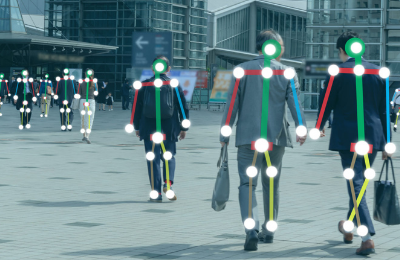
Object Detection and Identification in Video Analytics
What it is object detection and recognition When it comes to video surveillance analytics, object detection and identification is a crucial component. This capability empowers operators to locate a specific object, such as a person, vehicle, or backpack, and then track it from frame to frame. The result? The ability to quickly identify the object through hours of footage, thereby giving security and police investigators critical forensic evidence; business owners much-needed insights; and more impactful applications for a diverse set of users. To break it down, object detection is simply the ability to detect objects in video – however, this process is far from simple when executed by an advanced technology. The first step, “object extraction,” detects and tracks an object at any given time. Then, another technology called “background/foreground separation” is added, which identifies a static background of the scene. The ability to extract objects from video and differentiate them from the backdrop against which they are detected, enables more sophisticated video analytic activity, such as forensic search, real-time alerting, or VIDEO SYNOPSIS® technology – which displays all extracted video objects simultaneously, so that the full activity of the hours-long scene can be viewed all at once, rather than in linear time. How object detection and recognition works So, how is object detection – and subsequent object recognition – made possible? Through artificial intelligence. We encounter artificial intelligence and deep learning throughout our day, through tools such as voice recognition or automatic translation services; deep learning is an AI-backed discipline by which computers learn through exposure to data and execute task such as identifying objects or recognizing an object throughout a video. In order for deep learning to be successful, you need vast amounts of data, which must be processed and annotated. This data is then used to train the network until it is able to repeat what it has been trained to do. In terms of object detection and recognition, the training data (which, in the case of video analytics, is video itself), will be broken down to individual frames to extract every item or object and train the system’s deep learning neural networks to associate specific objects with their classification and attributes. For example, if investigators are looking for a missing child wearing pink pants, they can leverage video analytics to search video evidence for objects that the system can recognize are people wearing pants that are pink. The user would filter his or her search based on these attributes, and the video analytics software – having been exposed to large data sets of people, pink objects, and pants – would be able to answer a query against actual footage: ‘identify all instances of people wearing pink pants.’ In order to detect matches, the deep learning algorithm will need to know what pink is and will need to have been fed thousands of data examples of this color. This is repeated ad infinitum for as many objects are required. Object tracking It is not enough that an object be detected, it must also be tracked. For any video search – whether as part of a law enforcement investigation or a way to gain deeper business intelligence – it is important to be able to accurately follow the object from the time it enters the scene until the time is leaves the scene, even if there is an obstruction or crowd. Once the object is detected and tracked, descriptive information (or metadata) can be applied to it to create a vast structured database of classified objects. This step is what allows the technology to quickly examine hours of footage to identify the specific object – or, in our example, the pink pants. When is it used? Object detection and recognition can be used before, during and after an event occurs. Reviewing capabilities allow for the investigation of an event that has already occurred. But real-time alerting can also be enabled, which allows for the response to an event as it is happening in order to identify objects of interest. Object detection and recognition also has applications beyond law enforcement. For example, a real-time alert can be set for a specific camera at the entrance of a construction site to ensure that everyone who passes is wearing a hard hat. If someone were not wearing the designated object, in this case an orange hard hat, an alert would be sent to operators who could then respond in real-time. Object detection and recognition are important underlying technological capabilities that drive sophisticated video analytics for diverse business and security use cases. Want to learn how video analysis can streamline your day-to-day decision making with actionable intelligence? Take the BriefCam Business Case Assessment.
อ่านต่อ
งานสัมมนา A&E for world class security design
เมื่อวันที่ 16-18 พฤศจิกายน 2564 ทางบริษัทเบคอม อินเตอร์เน็ทเวอร์ค จำกัด ได้จัดงาน Webinar ในหัวข้อ A&E for world class security design ทางบริษัทฯ ใคร่ขอขอบคุณทีมงานทุกฝ่ายที่ช่วยงานสัมมนาครั้งนี้ให้สำเร็จลุล่วงไปได้ด้วยดี ขอขอบคุณลูกค้าทุกท่านที่ให้เกียรติสละเวลามาร่วมเป็นส่วนหนึ่งในงานสัมมนา ตลอดจนให้ความสนใจในผลิตภัณฑ์ของบริษัท และเข้าร่วมกิจกรรมทุกกิจกรรมในงานสัมมนา ขอบพระคุณทีมงานทั้งเบื้องหน้า และเบื้องหลังทุกท่าน ที่ช่วยกันขับเคลื่อนจนงานครั้งนี้ผ่านไปได้ด้วยดี ขอบคุณ Vendor #AXIS ที่ให้การสนับสนุนในการจัดงานสัมมนาในครั้งนี้ ขอบพระคุณผู้บริหารระดับสูงของบริษัทฯ ทุกท่าน ทั้งท่านที่คอยสนับสนุนอยู่เบื้องหลัง และท่านที่เป็นด่านหน้าสุดสำคัญของงานสัมมนาครั้งนี้อย่างคุณธนกฤต โรจนศิรประภา หากในงานครั้งนี้มีสิ่งที่ผิดพลาดประการใด ทางบริษัทฯ ใคร่ขอน้อมรับคำติชมของทุกท่าน เพื่อนำไปพัฒนาในการจัดสัมมนาครั้งต่อๆไป
อ่านต่อ
งานสัมมนา Unified Security 4.0
เมื่อวันที่ 20 ตุลาคม 2564 ทางบริษัทเบคอม อินเตอร์เน็ทเวอร์ค จำกัด ได้จัดงาน Webinar ในหัวข้อ Unified Security 4.0 ทางบริษัทฯ ใคร่ขอขอบคุณทีมงานทุกฝ่ายที่ช่วยงานสัมมนาครั้งนี้ให้สำเร็จลุล่วงไปได้ด้วยดี ขอขอบคุณลูกค้าทุกท่านที่ให้เกียรติสละเวลามาร่วมเป็นส่วนหนึ่งในงานสัมมนา ตลอดจนให้ความสนใจในผลิตภัณฑ์ของบริษัท และเข้าร่วมกิจกรรมทุกกิจกรรมในงานสัมมนา ขอบพระคุณทีมงานทั้งเบื้องหน้า และเบื้องหลังทุกท่าน ที่ช่วยกันขับเคลื่อนจนงานครั้งนี้ผ่านไปได้ด้วยดี ขอบคุณ Vendor #Genetec ที่ให้การสนับสนุนในการจัดงานสัมมนาในครั้งนี้ ขอบพระคุณผู้บริหารระดับสูงของบริษัทฯ ทุกท่าน ทั้งท่านที่คอยสนับสนุนอยู่เบื้องหลัง และท่านที่เป็นด่านหน้าสุดสำคัญของงานสัมมนาครั้งนี้อย่างคุณธนกฤต โรจนศิรประภา หากในงานครั้งนี้มีสิ่งที่ผิดพลาดประการใด ทางบริษัทฯ ใคร่ขอน้อมรับคำติชมของทุกท่าน เพื่อนำไปพัฒนาในการจัดสัมมนาครั้งต่อๆไป
อ่านต่อ
งานสัมมนา Beyond Physical Security Conference
เมื่อวันที่ 29 กันยายน 2564 ทางบริษัทเบคอม อินเตอร์เน็ทเวอร์ค จำกัด ได้จัดงาน Webinar ในหัวข้อ Beyond Physical Security Conference ทางบริษัทฯ ใคร่ขอขอบคุณทีมงานทุกฝ่ายที่ช่วยงานสัมมนาครั้งนี้ให้สำเร็จลุล่วงไปได้ด้วยดี ขอบพระคุณคู่ค้าทางธุรกิจทุกท่าน ที่ได้สละเวลาอันมีค่าของท่าน และให้ความสนใจเข้าร่วมงานสัมมนาในครั้งนี้ ตลอดจนให้ความสนใจในผลิตภัณฑ์ของบริษัท และเข้าร่วมกิจกรรมทุกกิจกรรมในงานสัมมนา ขอบพระคุณทีมงานทั้งเบื้องหน้า และเบื้องหลังทุกท่าน ที่ช่วยกันขับเคลื่อนจนงานครั้งนี้ผ่านไปได้ด้วยดี ทั้งทีมงานพัฒนาเนื้อหา ทีมงานวิทยากร ทีมงานผู้ดำเนินรายการ ทีมงานจัดหาของที่ระลึกสำหรับลูกค้าทุกท่าน โดยเฉพาะทีมงานหน้าด่านที่ต้องกราบเรียนเชิญลูกค้าด้วยตัวเอง ขอบพระคุณผู้บริหารระดับสูงของบริษัทฯ ทุกท่าน ทั้งท่านที่คอยสนับสนุนอยู่เบื้องหลัง และท่านที่เป็นด่านหน้าสุดสำคัญของงานสัมมนาครั้งนี้อย่างคุณธนกฤต โรจนศิรประภา ทางบริษัทฯ รู้สึกซาบซึ้งและเป็นเกียรติอย่างมาก ที่ท่านได้สละเวลาของท่านมาร่วมงานสัมมนาในครั้งนี้ และหากในงานครั้งนี้มีสิ่งที่ผิดพลาดประการใด ทางบริษัทฯ ใครขอน้อมรับคำติชมของท่านสำหรับการพัฒนาในครั้งต่อๆ ไปของเรา
อ่านต่อ